Embarking on a journey to revamp your home with DIY siding replacement tips for budget renovators opens up a world of possibilities. From cost-effective solutions to the satisfaction of a job well done, this guide will equip you with the knowledge and tools needed to transform your space with ease.
As we delve deeper into the intricacies of DIY siding replacement, you'll uncover valuable insights and practical advice to navigate this home improvement project successfully.
DIY Siding Replacement Benefits
Replacing siding on a budget can offer numerous advantages for homeowners looking to improve the appearance and functionality of their homes without breaking the bank. DIY siding replacement allows individuals to save money compared to hiring professionals, while also providing a sense of satisfaction and pride in completing a home improvement project independently.
Cost-Effective Solution
- DIY siding replacement can significantly reduce labor costs, as you won't have to pay for professional installation services.
- By purchasing materials yourself and doing the work, you have more control over the total cost of the project. You can shop around for the best deals and choose affordable options that fit your budget.
- Additionally, you can save on contractor fees and other expenses associated with hiring professionals to complete the job.
Personal Fulfillment
- Completing a DIY siding replacement project can bring a sense of accomplishment and pride, as you've taken a hands-on approach to improving your home.
- You have the opportunity to learn new skills and gain valuable experience in home improvement, which can be applied to future projects.
- Seeing the transformation of your home's exterior through your own hard work can be incredibly rewarding and satisfying.
Essential Tools and Materials
When embarking on a DIY siding replacement project, having the right tools and materials is crucial to ensure a successful outcome without breaking the bank.
Necessary Tools:
- Siding Removal Tool
- Hammer
- Tape Measure
- Circular Saw
- Utility Knife
- Caulk Gun
- Level
- Safety Glasses
- Gloves
Key Materials:
- New Siding Panels
- Nails
- Caulk
- House Wrap
- Trim Pieces
- Patching Compound
- Paint
- Primer
Affordable Sources:
For budget renovators, sourcing tools and materials at affordable prices is essential. Consider checking out local hardware stores for discounts, sales, or clearance items. Online marketplaces like eBay, Amazon, or even Facebook Marketplace can also offer budget-friendly options. Additionally, reaching out to friends or neighbors who may have leftover materials from their own home improvement projects could help save costs.
Choosing the Right Siding Material
When it comes to choosing the right siding material for your budget-friendly replacement project, it's important to consider both cost-effectiveness and durability. Here, we will compare different siding materials and discuss their pros and cons to help you make an informed decision.
Vinyl Siding
One of the most popular and cost-effective siding options, vinyl siding is durable, low-maintenance, and comes in a variety of colors and styles. However, it may not be as environmentally friendly as other options, and it can crack or fade over time.
Fiber Cement Siding
Fiber cement siding is another durable and low-maintenance option that mimics the look of wood or stucco. It is resistant to rot, fire, and insects, but it can be more expensive than vinyl siding.
Wood Siding
Wood siding offers a natural, classic look that can enhance the curb appeal of your home. While it is biodegradable and renewable, wood siding requires more maintenance and is susceptible to rot, pests, and fire.
Engineered Wood Siding
Engineered wood siding is a more affordable alternative to traditional wood siding. It is made from wood fibers and resins, providing a durable and moisture-resistant option. However, it may not have the same aesthetic appeal as real wood.
Preparing the Exterior for Siding Replacement
Before starting the siding replacement project, it is crucial to properly prepare the exterior of your house to ensure a smooth and successful installation process. This involves inspecting the existing siding, addressing any underlying issues, and prepping the surface for the new siding.
Inspecting the Exterior
- Begin by carefully examining the current siding for any signs of damage, rot, or mold. Make note of any areas that may need repair before installing the new siding.
- Check for any gaps, cracks, or holes in the existing siding that could allow moisture to seep in and cause further damage to the structure of the house.
- Look for any signs of pest infestation or insect damage that may need to be addressed before proceeding with the siding replacement.
Cleaning and Priming the Surface
- Thoroughly clean the exterior surface of the house to remove dirt, grime, and any existing paint or coating that may interfere with the new siding installation.
- Consider power washing the exterior to ensure a clean and smooth surface for the new siding to adhere to.
- Prime the surface with a high-quality primer to enhance adhesion and protect the underlying structure from moisture damage.
Step-by-Step Installation Guide
When it comes to replacing siding on a budget, following a step-by-step guide can help you achieve professional results without breaking the bank. From removing old siding to installing the new one, each step is crucial for a successful renovation project.
Removing Old Siding and Preparing for New Installation
- Start by carefully removing the old siding using a pry bar and hammer. Make sure to dispose of the old materials responsibly.
- Inspect the exterior wall for any damage or rot that needs to be repaired before installing the new siding.
- Clean the surface thoroughly to ensure proper adhesion of the new siding material. Use a pressure washer or a scrub brush to remove dirt and debris.
- Install a moisture barrier, such as house wrap, to protect the interior of your home from water damage.
Properly Installing the New Siding
- Start by measuring and cutting the new siding material to fit the dimensions of your exterior wall. Use a circular saw or a utility knife for precise cuts.
- Begin installing the siding from the bottom up, making sure to overlap each piece to prevent water infiltration. Secure the siding in place using nails or screws.
- Use a level to ensure that each piece of siding is installed straight and aligned with the rest of the wall.
- Finish the installation by adding trim pieces around windows, doors, and corners to give your home a polished look.
Troubleshooting Common Issues
When taking on a DIY siding replacement project, it's important to be prepared for some common challenges that may arise. By being aware of these issues and knowing how to troubleshoot them effectively, you can ensure a smoother and more successful renovation process.
Uneven Walls
If you encounter uneven walls while replacing siding, it can make the installation process more difficult. To address this issue, consider using furring strips to create a level surface for the new siding. These strips can help to even out the wall and provide a solid base for the installation.
Fitting Issues
Facing fitting issues with the siding can be frustrating, but there are ways to troubleshoot this problem. Make sure to measure accurately and cut the siding precisely to ensure a proper fit. If you encounter gaps or misalignments, consider adjusting the pieces or using trim to cover any imperfections.
Avoiding Mistakes
To prevent common mistakes during siding replacement, take the time to plan and prepare properly. Double-check measurements, follow manufacturer instructions, and work slowly and carefully to avoid errors. If you do make a mistake, don't panic – assess the situation calmly and find a solution before moving forward.
Finishing Touches and Maintenance
After completing the DIY siding replacement project, it is essential to focus on the finishing touches and maintenance to ensure the longevity and aesthetic appeal of your new siding.
Final Touches
- Inspect the entire siding installation for any gaps, loose panels, or areas that may need caulking or sealing. Address these issues promptly to prevent water infiltration.
- Consider adding trim pieces or decorative elements to enhance the overall look of your home's exterior. Trim can provide a polished finish and create a cohesive appearance.
- Clean the new siding thoroughly to remove any dirt, dust, or debris that may have accumulated during the installation process. Use a gentle cleanser and a soft brush to avoid damaging the siding material.
Maintenance Tips
- Regularly inspect the siding for signs of damage, such as cracks, warping, or discoloration. Address any issues promptly to prevent further damage and maintain the integrity of the siding.
- Clean the siding at least once a year to remove dirt, mold, and mildew. Use a mild detergent and a soft brush to scrub the surface gently. Rinse thoroughly with water to prevent residue buildup.
- Trim vegetation and bushes near the siding to prevent moisture retention and potential damage. Maintain a clear space around the siding to promote airflow and prevent mold growth.
Enhancing Curb Appeal
- Consider adding landscaping elements, such as flower beds, potted plants, or decorative stones, to complement the new siding and create a visually appealing exterior.
- Upgrade your front door or add outdoor lighting fixtures to enhance the overall aesthetic of your home. These small changes can make a significant impact on your home's curb appeal.
- Repaint or touch up the trim, shutters, or other exterior elements to create a cohesive color scheme that complements the new siding. A fresh coat of paint can revitalize the entire exterior of your home.
Last Word
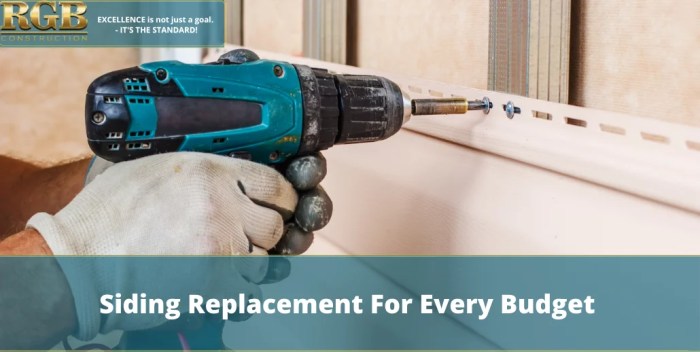
In conclusion, DIY siding replacement tips for budget renovators offer a gateway to achieving a refreshed exterior for your home without breaking the bank. By following the steps Artikeld in this guide, you can elevate your property's curb appeal and enjoy the rewards of your hard work for years to come.
Helpful Answers
How can DIY siding replacement benefit me financially?
DIY siding replacement allows you to save money by eliminating labor costs associated with hiring professionals, making it a budget-friendly option for renovators.
What are some key materials required for DIY siding replacement?
Essential materials include siding panels, nails, trim pieces, and caulking to ensure a successful replacement project.
Which siding material is both durable and cost-effective for budget renovators?
Vinyl siding is a popular choice due to its affordability and low maintenance requirements, making it an ideal option for those on a budget.
How can I maintain the new siding for longevity?
Regular cleaning and inspections can help prolong the lifespan of your siding, ensuring that it remains in optimal condition for years to come.