Exploring the impact of siding on home insurance rates unveils a crucial aspect of homeownership that often goes overlooked. From the type of siding material to proper installation, each detail plays a significant role in determining insurance premiums. Let's delve into the intricate relationship between siding choices and insurance costs.
Factors that Influence Home Insurance Rates Related to Siding
When it comes to home insurance rates, the type of siding material used on your home can have a significant impact. Let's explore the various factors that influence insurance costs related to siding.
Type of Siding Material
The type of siding material you choose for your home can affect your insurance rates. Some materials, like vinyl or fiber cement, are more durable and resistant to damage, resulting in lower insurance premiums. On the other hand, wood siding may be more prone to damage from pests, moisture, or fire, leading to higher insurance costs.
Siding Quality and Durability
The quality and durability of your siding can also influence insurance premiums. High-quality siding that is well-maintained and in good condition is less likely to require repairs or replacements due to weather or other damage. This can result in lower insurance rates compared to lower-quality siding that is more susceptible to damage.
Comparison of Siding Options
When considering different siding options, it's essential to weigh the pros and cons in terms of insurance costs. For example, while brick or stone siding may be more expensive upfront, their durability and resistance to damage could lead to lower insurance premiums over time compared to more vulnerable materials like wood or aluminum siding.
Siding Maintenance Impact
Regular maintenance of your siding, such as cleaning, painting, or repairs, can also influence insurance rates. Proper maintenance shows insurers that you are actively caring for your home and can help prevent damage that may lead to insurance claims. Neglecting siding maintenance, on the other hand, may result in higher insurance costs due to increased risk of damage.
Importance of Proper Installation in Relation to Insurance Rates

Proper installation of siding plays a crucial role in determining home insurance rates. When siding is not installed correctly, it can lead to various issues that may result in insurance claims and higher premiums.
Impact of Improper Siding Installation on Insurance Premiums
Improper siding installation can result in gaps, leaks, and other vulnerabilities that compromise the structural integrity of the home. This can increase the risk of water damage, mold growth, and pest infestations, which are all common insurance claims. As a result, insurance companies may view homes with faulty siding installations as higher risks, leading to higher insurance premiums.
Role of Professional Installation in Minimizing Insurance Costs
Professional installation ensures that the siding is properly installed according to manufacturer specifications and building codes. This reduces the likelihood of issues arising due to installation errors, lowering the risk of insurance claims. Insurance companies often offer discounts for homes with professionally installed siding, as they are considered lower risks.
Impact of DIY Siding Projects on Insurance Rates
DIY siding projects, while cost-effective, can often result in improper installations if not done correctly. This can lead to the same issues as poorly installed siding done by inexperienced homeowners. Insurance companies may view DIY siding projects as higher risks, resulting in increased insurance premiums to account for the potential risks associated with amateur installations.
Examples of Insurance Claims Related to Faulty Siding Installations
Insurance claims related to faulty siding installations can include water damage from leaks, mold growth due to moisture infiltration, and pest infestations as a result of gaps in the siding. These issues can be costly to repair and may lead to increased insurance premiums for homeowners with inadequate siding installations.
How Siding Maintenance and Repairs Affect Insurance Premiums
Regular maintenance and timely repairs of siding can significantly impact your home insurance rates
Importance of Regular Siding Maintenance
- Regularly inspect your siding for signs of damage, such as cracks, warping, or rot.
- Clean your siding at least once a year to prevent mold, mildew, and other issues.
- Consider applying a fresh coat of paint or sealant to protect your siding from the elements.
Benefits of Timely Repairs
- Addressing small issues promptly can prevent them from escalating into larger, more costly problems.
- By maintaining your siding, you reduce the likelihood of insurance claims due to weather-related damage.
- Insurance companies may offer lower premiums to homeowners who demonstrate proactive maintenance and care of their property.
Consequences of Neglecting Siding Maintenance
- Neglecting siding maintenance can lead to water infiltration, mold growth, and structural damage.
- Insurance companies may view neglected siding as a higher risk, resulting in increased premiums.
- In extreme cases, insurance companies may even deny coverage if the condition of your siding poses a significant risk.
Tips for Maintaining Siding to Reduce Insurance Rates
- Regularly clean your siding using a mild detergent and a soft brush to remove dirt and debris.
- Inspect your siding for any signs of damage and address them promptly to prevent further deterioration.
- Trim trees and bushes near your home to prevent branches from damaging your siding during storms.
- Consider hiring a professional to conduct an annual inspection and maintenance of your siding for optimal protection.
Ultimate Conclusion
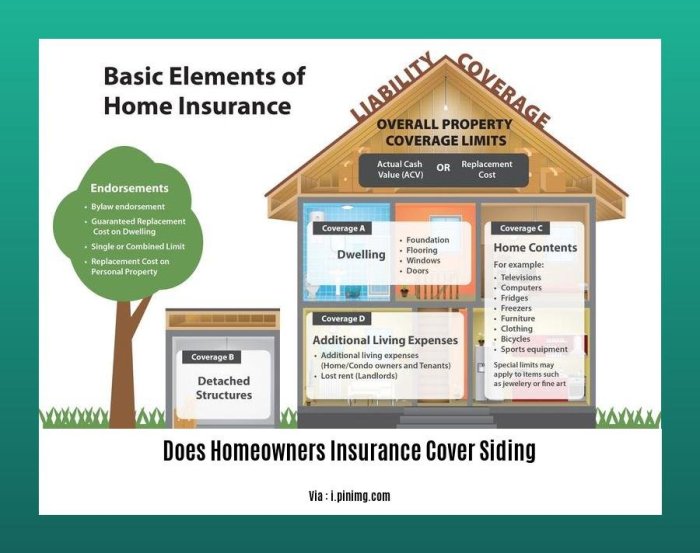
As we conclude our discussion on how siding influences home insurance rates, it becomes evident that the decisions regarding siding material, installation, and maintenance have a direct correlation with insurance premiums. By understanding these dynamics, homeowners can make informed choices to protect their homes while managing insurance costs effectively.
Expert Answers
How does the type of siding material affect insurance rates?
The type of siding material can impact insurance rates based on factors like durability, fire resistance, and susceptibility to damage.
What role does professional installation play in minimizing insurance costs?
Professional installation ensures that siding is correctly installed, reducing the risk of future damage and potential insurance claims.
Why is timely siding maintenance important for insurance rates?
Regular maintenance helps prevent issues that could lead to insurance claims, thus potentially lowering insurance premiums.