Exploring the crucial role of siding in passive house design unveils a fascinating journey into how this element impacts both energy efficiency and visual appeal. From innovative materials to sustainable choices, the realm of siding in passive houses is a blend of function and style.
Delving deeper, we uncover the intricate relationship between siding and the overall performance of passive houses, shedding light on key considerations that shape this vital aspect of sustainable architecture.
The Importance of Siding in Passive House Design
When it comes to passive house design, siding plays a crucial role in the overall energy efficiency and performance of the building. Not only does siding protect the structure from the elements, but it also helps regulate temperature and reduce energy consumption.
Contribution to Energy Efficiency
Siding acts as the first line of defense against heat loss and gain in a passive house. High-quality siding materials with proper insulation properties can minimize thermal bridging and prevent air leakage, thus reducing the need for additional heating or cooling.
This results in lower energy bills and a more sustainable living environment.
Commonly Used Siding Materials
- 1. Wood: Known for its natural beauty and insulation properties, wood siding is a popular choice for passive houses. However, it requires regular maintenance to prevent rot and decay.
- 2. Fiber Cement: Durable and low-maintenance, fiber cement siding offers excellent protection against moisture and pests. It is also fire-resistant, making it a safe option for passive house construction.
- 3. Metal: Metal siding is highly durable and can withstand harsh weather conditions. It is lightweight, recyclable, and often used in modern passive house designs.
- 4. Vinyl: Affordable and easy to install, vinyl siding is a common choice for passive houses. While not as environmentally friendly as other materials, it provides good insulation and requires minimal upkeep.
Impact of Different Siding Materials
The choice of siding material can significantly impact the overall performance of a passive house. For example, wood siding offers natural insulation but may require more maintenance compared to low-maintenance options like fiber cement or metal. It is essential to consider factors such as durability, insulation properties, maintenance requirements, and environmental impact when selecting siding for a passive house.
Factors to Consider When Selecting Siding for Passive Houses
When selecting siding for passive houses, several key factors come into play. These factors include insulation, durability, aesthetics, environmental impact, maintenance requirements, longevity, and the role of color and texture in overall design.
Insulation
Insulation is a crucial factor to consider when choosing siding for passive houses. High-quality insulation properties help regulate the internal temperature of the house, reducing the need for additional heating or cooling. Opting for siding materials with excellent insulation capabilities can enhance the overall energy efficiency of the passive house.
Durability
Durability is another essential consideration when selecting siding for passive houses. The siding material should be able to withstand various weather conditions and external elements to ensure the longevity of the house's exterior. Durable siding options can help maintain the structural integrity of the passive house over time.
Environmental Impact
The choice of siding material can significantly impact the overall environmental footprint of a passive house. Opting for sustainable and eco-friendly siding options can reduce the environmental impact of the construction and operation of the house. Materials that are recyclable or made from renewable resources are preferred for their minimal impact on the environment.
Maintenance Requirements and Longevity
Consider the maintenance requirements and longevity of different siding options before making a decision
Color and Texture
The color and texture of the siding play a crucial role in the overall aesthetics of a passive house. The right color palette and texture can complement the architectural design of the house, enhance curb appeal, and contribute to the overall visual appeal of the property.
Consider how different siding options can affect the overall look and feel of the passive house when making a selection.
Design Considerations for Siding in Passive House Construction
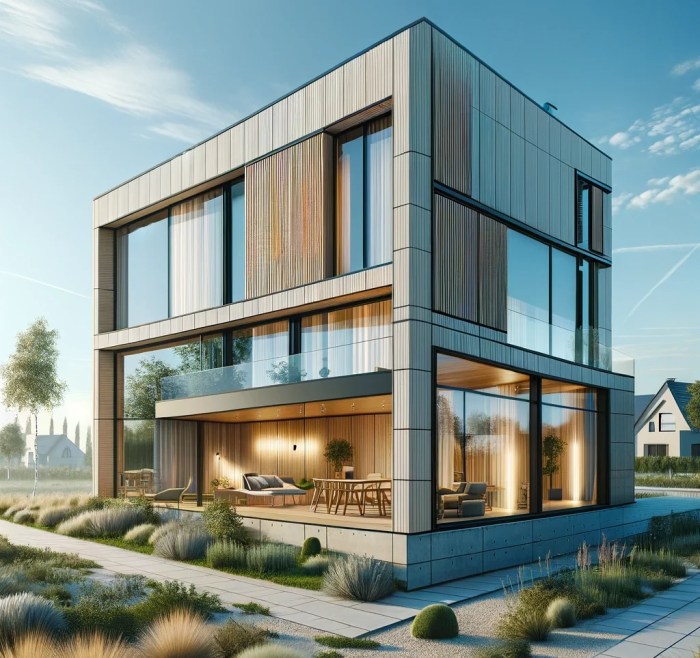
When it comes to integrating siding in passive house architecture, several design principles must be considered to ensure optimal performance and energy efficiency. The orientation of a passive house plays a crucial role in siding design and material selection, impacting factors such as solar gain, insulation, and ventilation.
Innovative siding designs can further enhance the overall performance of a passive house, contributing to its sustainability and comfort. Proper installation techniques are essential to maximize the benefits of siding in passive house construction, ensuring airtightness, moisture management, and durability.
Impact of Orientation on Siding Design and Material Selection
Orientation influences the amount of sunlight a passive house receives, affecting heating and cooling needs. Siding materials with high thermal mass, such as brick or stone, are ideal for south-facing walls to absorb and retain heat during the day. For west-facing walls, reflective or light-colored siding can help minimize heat gain in the afternoon.
East-facing walls may benefit from materials that allow for passive solar heating in the morning. North-facing walls require high insulation levels to reduce heat loss.
Innovative Siding Designs for Enhanced Performance
Innovative siding designs like green walls or living facades can improve insulation, air quality, and aesthetics of a passive house. These designs incorporate vegetation to provide additional insulation, reduce heat gain, and promote biodiversity. Vertical gardens or modular panels can also be used to enhance the aesthetic appeal of a passive house while contributing to its overall performance.
Maximizing Benefits Through Proper Installation Techniques
Proper installation of siding is crucial to ensure airtightness and prevent moisture infiltration in a passive house. Techniques such as rainscreen cladding, air barriers, and vapor barriers help maintain the integrity of the building envelope and minimize energy loss. Attention to detail during installation can significantly impact the long-term performance and durability of the siding, enhancing the overall efficiency of the passive house.
Closure
In conclusion, the narrative of siding in passive house design transcends mere aesthetics, weaving a narrative of sustainability, efficiency, and thoughtful integration. As we reflect on the impact of siding choices, we see a harmonious blend of form and function that defines the essence of passive house construction.
Common Queries
How does siding contribute to the energy efficiency of a passive house?
Siding acts as a protective layer, enhancing insulation and reducing heat loss, thus improving the overall energy efficiency of a passive house.
What are the maintenance requirements for different siding options?
The maintenance needs vary based on the material, with some requiring periodic painting or sealing, while others are low maintenance and durable.
How does the orientation of a passive house influence siding design?
The orientation affects sun exposure and wind patterns, impacting the choice of siding material and design to optimize energy performance.